The Second Tab: Turning Your About Page Into Evidence
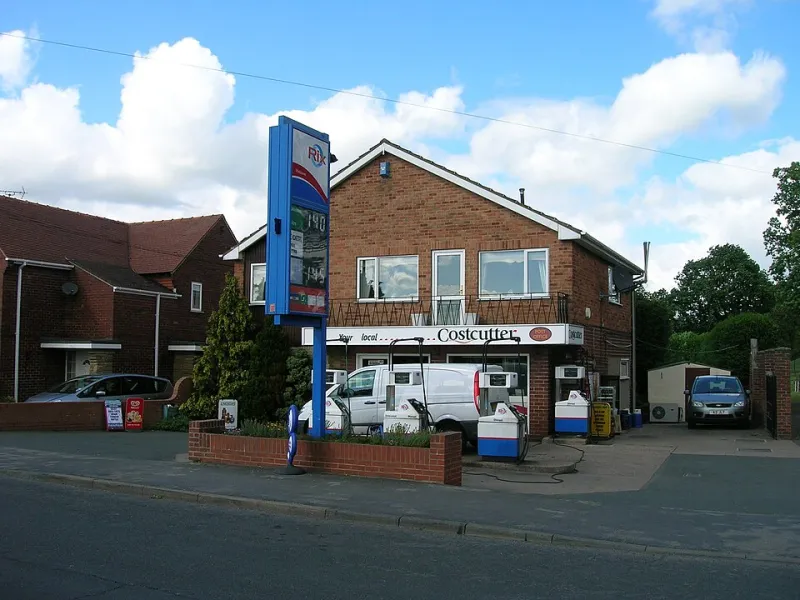
Photo: JThomas , CC BY-SA 2.0, via Wikimedia Commons
Most people do not start on your About page. They end up there.
A homeowner comparing three electricians will have your homepage open, then your services page, then — somewhere between getting a quote and deciding whether to ring — they will open About in a second tab. Same for a facilities manager checking a cleaning contractor, or a parent looking at a tutoring company. The About page is the due-diligence page. It is not the welcome mat. It is the reference check.
That changes what belongs on it. If your About page reads like a memoir written by committee — 'passionate about quality', 'customer-focused', 'established to deliver excellence' — you have spent the page on mood music. The visitor is looking for evidence. Here is what evidence looks like on a UK service site.
The second-tab test
Open your About page in a private browser window and imagine you are a stranger who has just had a quote. You have no reason to trust the firm yet. What on this page would make you feel daft for not checking? What would make you close the tab?
Most About pages fail because they answer questions nobody asked. They talk about values, vision and a journey. They do not say who runs the business, where it trades from, how long it has been going, or who will actually turn up. Those are the things a cautious buyer is trying to establish. The page does not need to be long. It needs to be checkable.
Names beat job titles
'Our team of experienced professionals' is not a person. A photo of six people in matching polo shirts with no names underneath is not much better. If a customer is going to hand over a deposit or let someone into their home, they want to know who they are dealing with.
Name the people who matter: the owner, the manager, the person who answers the phone, the lead installer. Use real photographs if you can. If you cannot, use initials and roles rather than a stock image of a smiling stranger. A short line — 'Ruth has run the office since 2016 and handles every booking' — does more trust work than a paragraph of corporate prose.
An address that survives a map search
A PO box is not a location. A virtual office in a serviced building is not a location either, unless you are clear that it is a correspondence address. If you serve customers from a yard, a workshop or a unit on an industrial estate, say so. If you are home-based, say that too — plenty of respected UK firms are.
The test is simple: can a stranger put your address into a map app and understand where you actually operate from? If the answer is no, the address is decoration. Add the town or city you trade from, the areas you cover, and a phone number that a human answers during working hours. The About page and the contact page should tell the same story.
Dates do more work than adjectives
'Established' means nothing. 'Trading since 2011' means something. A founding date gives the reader a fixed point to check, and it quietly says the firm has survived a few winters. You do not need a dramatic origin story. A short, dated paragraph is enough: who started it, why, and what changed along the way.
Avoid the temptation to turn this into a saga. Two or three sentences are plenty. 'We started in 2008 doing small domestic jobs from a lock-up in Stockport. In 2015 we took on our first full-time engineer. We still do the small jobs.' That is a story with dates in it, and it tells the reader something useful about scale and focus.
Credentials in plain English
Trade bodies, insurance, certifications and training all matter, but they are not self-explanatory. 'Gas Safe registered' is useful to someone who knows what it means. For everyone else, add a short gloss: 'Gas Safe registration means we are legally allowed to work on gas appliances — you can check our number on the Gas Safe Register.'
List the credentials that are relevant to the work being bought. Do not pad the page with every membership certificate since 2004. If you are a member of a competent-person scheme, a trade association or a local business network, name it and say what it does for the customer. A badge with no explanation is just a small picture.
The honest exclusion list
This is the part most About pages leave out. Say what you do not do. 'We do not carry out emergency call-outs after 6pm.' 'We do not work on commercial boilers.' 'We do not offer a same-day service.'
An exclusion list feels risky because it might send someone away. In practice, it does the opposite. It proves you are not trying to be everything to everyone, and it saves the customer a wasted phone call. It also protects your team from enquiries that were never going to convert. On a UK service site, a short 'what we do not cover' section is a credibility signal, not a weakness.
A ten-minute rewrite audit
Open your About page and check it against these six questions:
- Can I see a named person who is accountable for the work?
- Is there a real address or trading location, not just a county?
- Is there a date the firm started, and a date for any major change?
- Are the credentials explained in plain English?
- Does the page say who will actually turn up or answer the phone?
- Is there at least one thing the firm does not do?
If you cannot answer three or more, the page is probably still a brochure. Rewrite it as evidence. Keep the personality — the About page is allowed to have one — but make sure the personality is attached to real names, real dates and real limits. The customer reading it in the second tab is not looking for a friend. They are looking for a reason to stop worrying.